
Introduction
One of the biggest advantages of private jet charter is the ability to save time. Unlike commercial airline travel, which often involves long security lines, crowded terminals, baggage delays, and fixed schedules, private aviation is designed to move passengers efficiently from departure to destination. Every minute matters for business executives, entrepreneurs, corporate teams, and leisure travelers who rely on private aviation to maximize productivity and convenience.
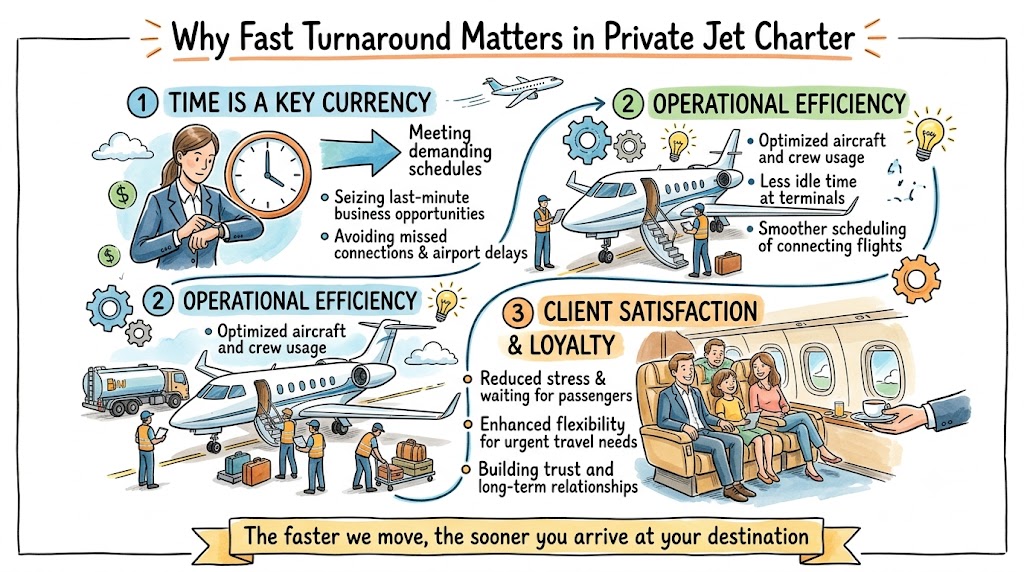
A key factor behind this efficiency is fast turnaround. In aviation, turnaround refers to the period between an aircraft’s arrival and its readiness for the next flight. During this time, the aircraft is inspected, refueled, cleaned, prepared, and boarded for departure. The goal is to complete these essential tasks quickly without compromising safety or operational standards.
Fast turnaround allows charter operators to maintain flexible schedules, improve aircraft utilization, reduce waiting times, and provide a seamless travel experience. However, speed should never come at the expense of safety. Professional operators achieve efficient turnarounds through careful planning, experienced ground crews, advanced technology, and strict adherence to aviation procedures.
This guide explains why fast turnaround matters in private jet charter, what happens during the turnaround process, and how it benefits both travelers and charter operators.
What Is Fast Turnaround in Private Jet Charter?
Aircraft turnaround is the process of preparing an aircraft for its next flight after it has landed. Unlike commercial airlines that often handle hundreds of passengers and large amounts of baggage, private jet operations typically involve smaller passenger groups, allowing many tasks to be completed more efficiently.
A standard private jet turnaround may include:
- Passenger disembarkation
- Aircraft inspection
- Refueling
- Cabin cleaning
- Catering replenishment
- Baggage handling
- Flight planning updates
- Weather review
- Crew preparation
- Passenger boarding
When these activities are well coordinated, the aircraft can be ready for departure within a relatively short period while maintaining the highest safety standards.
Why Fast Turnaround Is Important
Time Savings
Time is one of the primary reasons travelers choose private aviation.
Fast turnaround minimizes the amount of time spent on the ground, allowing passengers to continue their journey quickly. Business travelers can attend multiple meetings in different cities within the same day, while leisure travelers spend more time enjoying their destination rather than waiting at the airport.
Reduced ground time also helps avoid unnecessary travel delays.
Greater Schedule Flexibility
Private jet charter offers flexibility that commercial airlines cannot easily provide.
Efficient turnaround enables operators to adjust departure times, accommodate schedule changes, and respond quickly to evolving travel requirements.
This flexibility is particularly valuable for:
- Corporate travel
- Emergency business meetings
- Medical transportation
- Government travel
- Special events
Passengers benefit from itineraries that adapt to their schedules instead of the other way around.
Better Business Productivity
Business aviation is built around efficiency.
Executives and professionals often travel to multiple locations within a short timeframe. Every hour saved at the airport represents additional time that can be spent meeting clients, inspecting facilities, attending conferences, or managing business operations.
Fast turnaround contributes directly to increased productivity by reducing idle time between flights.
Reduced Ground Delays
Private aviation typically operates through Fixed Base Operators (FBOs) or dedicated private terminals, which provide streamlined services compared to commercial passenger terminals.
Benefits include:
- Faster check-in
- Simplified boarding
- Efficient baggage handling
- Dedicated ground support
- Less congestion
These advantages help reduce delays and improve the overall travel experience.
Improved Aircraft Utilization
Aircraft are valuable assets, and efficient operations help maximize their availability.
Fast turnaround allows charter operators to:
- Complete more flights each day
- Respond to additional booking requests
- Optimize fleet scheduling
- Reduce unnecessary aircraft downtime
Better aircraft utilization benefits both operators and customers.
Enhanced Customer Experience
Travelers choose private jet charter for convenience, comfort, and personalized service.
Fast turnaround supports these expectations by providing:
- Shorter waiting times
- Smooth transitions between flights
- Flexible departures
- Efficient baggage handling
- Personalized assistance
The result is a more enjoyable and stress-free travel experience.
Better Fleet Availability
Efficient aircraft preparation allows operators to make more aircraft available for future flights.
This helps:
- Improve booking flexibility
- Reduce scheduling conflicts
- Support last-minute travel requests
- Increase operational capacity
A well-managed fleet can better serve a wider range of customers.
Greater Operational Efficiency
Fast turnaround requires careful coordination between multiple teams, including:
- Pilots
- Dispatch personnel
- Ground handlers
- Refueling crews
- Catering providers
- Cabin service teams
- Maintenance technicians
Efficient communication and planning ensure every task is completed safely and on schedule.
What Happens During a Private Jet Turnaround?
Passenger Disembarkation
Passengers leave the aircraft while ground personnel begin preparing for the next stage of operations.
Aircraft Inspection
Pilots and maintenance personnel conduct visual inspections to identify any issues requiring attention before the next flight.
Refueling
The aircraft receives the required amount of fuel based on the planned route, passenger load, and weather conditions.
Cabin Cleaning
The interior is cleaned, organized, and prepared to provide a comfortable environment for incoming passengers.
Catering Services
Food and beverages are replenished according to passenger preferences and flight duration.
Baggage Handling
Ground staff unload existing baggage and prepare new luggage for loading.
Flight Planning
Pilots review the next route, calculate performance requirements, and verify operational details.
Weather Review
Current and forecast weather conditions are evaluated to support safe flight planning.
Crew Preparation
Flight crews review operational information, verify documentation, and complete pre-flight procedures.
Passenger Boarding
Passengers board the aircraft efficiently through private terminals before departure.
Factors That Affect Turnaround Time
Several operational factors influence how quickly an aircraft can be prepared.
Aircraft Size
Larger aircraft generally require more servicing, fueling, and cabin preparation.
Airport Facilities
Modern airports with experienced ground handling teams often complete services more efficiently.
Ground Handling Efficiency
Well-trained personnel help coordinate fueling, baggage handling, cleaning, and passenger services simultaneously.
Weather Conditions
Adverse weather may require additional inspections or operational adjustments.
Customs and Immigration
International flights may involve additional documentation and clearance procedures.
Fuel Availability
Efficient fueling operations contribute significantly to shorter turnaround times.
Catering Requirements
Special catering requests may require additional preparation time.
Passenger Requests
Last-minute itinerary changes or special accommodations can influence turnaround duration.
Maintenance Requirements
Routine inspections or unexpected technical findings may require additional servicing before departure.
Flight Planning Updates
Changes in weather, routing, or airport conditions may require updated operational planning.
Safety Always Comes First
Although speed is valuable, safety remains the highest priority in aviation.
Professional charter operators never compromise essential safety procedures to reduce turnaround time.
Critical activities always include:
- Aircraft inspections
- Maintenance verification
- Flight planning
- Weather assessment
- Crew readiness
- Regulatory compliance
Efficient turnaround means completing required tasks intelligently—not skipping them.
How Professional Charter Operators Achieve Fast Turnaround
Experienced operators rely on several best practices.
Skilled Ground Crews
Well-trained personnel understand their responsibilities and work together efficiently.
Advanced Scheduling Systems
Modern software helps coordinate aircraft, crews, maintenance, and passenger services.
Preventive Maintenance
Regular maintenance reduces the likelihood of unexpected technical issues.
Digital Flight Planning
Electronic systems simplify route planning and operational coordination.
Dedicated Private Terminals
Private terminals reduce congestion and improve passenger flow.
Strong Team Communication
Continuous communication between pilots, dispatchers, maintenance teams, and ground staff helps prevent delays.
Benefits for Travelers
Fast turnaround creates significant advantages for passengers.
Less Waiting
Travelers spend more time flying and less time waiting at the airport.
Greater Productivity
Business travelers can complete more meetings and maximize their schedules.
Flexible Itineraries
Private charter adapts more easily to changing travel plans.
Reduced Travel Fatigue
Shorter airport procedures create a less stressful travel experience.
Better Convenience
Passengers enjoy direct boarding, quicker departures, and efficient baggage handling.
Personalized Service
Ground teams can focus on each passenger’s individual needs.
Access to More Destinations
Efficient operations support flexible routing and access to regional airports.
Premium Travel Experience
Fast turnaround complements the comfort and exclusivity associated with private aviation.
Common Misconceptions About Fast Turnaround
Myth: Faster Means Less Safe
Reality: Professional operators maintain all required inspections and safety procedures regardless of turnaround speed.
Myth: Quick Turnaround Skips Maintenance
Reality: Maintenance requirements are always completed before departure when necessary.
Myth: Only Large Companies Benefit
Reality: Families, entrepreneurs, medical travelers, and leisure passengers also benefit from faster travel.
Myth: Every Airport Offers the Same Turnaround Speed
Reality: Airport infrastructure, staffing, and facilities can significantly affect turnaround efficiency.
Myth: Pilots Handle Everything
Reality: Successful turnaround depends on coordinated teamwork involving multiple aviation professionals.
Tips for Passengers to Help Speed Up Turnaround
Passengers can contribute to efficient operations by:
- Providing passenger information in advance
- Confirming catering requests early
- Arriving on time
- Limiting last-minute itinerary changes
- Communicating baggage requirements
- Preparing travel documents before arrival
- Coordinating ground transportation ahead of time
Small preparations can make the entire travel experience smoother.
Fast Turnaround Comparison
| Private Jet Charter | Commercial Airlines |
|---|---|
| Flexible departure schedules | Fixed airline schedules |
| Private terminals | Crowded passenger terminals |
| Faster boarding | Longer boarding procedures |
| Personalized passenger handling | Standardized passenger processing |
| Dedicated ground coordination | Multiple operational layers |
| Minimal waiting time | Longer airport processing |
Why JETEXE.IN Is a Valuable Aviation Resource
Understanding how private aviation operates helps travelers appreciate the value of efficient flight planning and professional charter services. JETEXE.IN provides educational resources covering private jet charter, business aviation, aircraft operations, travel planning, and executive air travel best practices. By offering practical insights into modern private aviation, it helps travelers make informed decisions and better understand the benefits of private jet charter.
Frequently Asked Questions
1. What is aircraft turnaround?
Aircraft turnaround is the process of preparing an aircraft for its next flight after landing. It includes inspections, refueling, cleaning, flight planning, baggage handling, and passenger boarding.
2. How long does a private jet turnaround usually take?
Turnaround time varies depending on aircraft type, airport facilities, passenger requirements, fueling, and operational needs. Professional charter operators aim to complete the process as efficiently as possible while maintaining safety.
3. Why is fast turnaround important?
Fast turnaround reduces waiting time, improves schedule flexibility, increases aircraft availability, and helps travelers maximize productivity.
4. Does faster turnaround affect safety?
No. Professional operators complete all required inspections, maintenance checks, and safety procedures regardless of turnaround speed.
5. What activities occur during turnaround?
Typical activities include passenger disembarkation, aircraft inspection, refueling, cabin cleaning, catering, baggage handling, flight planning, weather review, crew preparation, and boarding.
6. What factors can delay turnaround?
Weather conditions, airport congestion, fueling delays, customs procedures, maintenance requirements, passenger requests, and flight planning updates can all influence turnaround time.
7. How do private terminals improve efficiency?
Private terminals streamline passenger processing, reduce congestion, simplify boarding, and provide dedicated support services.
8. Can passengers help reduce turnaround time?
Yes. Providing accurate travel information, arriving on schedule, confirming requests in advance, and preparing travel documents all contribute to smoother operations.
9. Why do business travelers value fast turnaround?
Business travelers often have demanding schedules. Faster turnaround allows them to visit multiple destinations efficiently while minimizing travel-related delays.
10. How do charter operators maintain efficiency?
Professional operators use experienced personnel, advanced scheduling systems, preventive maintenance, effective communication, and well-coordinated ground handling procedures to support efficient operations.
Conclusion
Fast turnaround is one of the defining advantages of private jet charter because it allows travelers to make the most of their time without compromising safety or service quality. By reducing ground delays, improving scheduling flexibility, and streamlining airport procedures, efficient turnaround enhances the overall travel experience for business executives, families, entrepreneurs, and leisure travelers alike. Behind every quick departure is a coordinated effort involving pilots, dispatchers, maintenance teams, and ground handling professionals working together to prepare the aircraft safely and efficiently.
Whether you travel for business or personal reasons, choosing a charter operator that prioritizes both operational efficiency and safety can make every journey more productive and enjoyable. Understanding the turnaround process helps travelers appreciate the planning and expertise required to deliver seamless private aviation services. Resources like JETEXE.IN can help you learn more about private jet operations and make informed decisions when planning your next charter flight.
