
Introduction
Business travel has evolved significantly as organizations seek faster, more efficient ways to move executives and teams between meetings, project sites, conferences, and international offices. For many companies, time is one of the most valuable business assets, and reducing travel-related delays can directly improve productivity and decision-making.
Commercial airline travel often involves fixed schedules, lengthy security procedures, crowded terminals, connecting flights, and unexpected delays. While these services meet the needs of many travelers, they may not always align with the demands of executive business travel, especially when multiple destinations or time-sensitive meetings are involved.
Corporate jet charter services offer businesses greater flexibility, enhanced privacy, improved travel efficiency, and a productive environment where teams can continue working throughout the journey. However, achieving these benefits requires proper planning and coordination before every trip.
Why Companies Choose Corporate Jet Charters
Corporate jet charter services are increasingly used by organizations that require efficient, flexible, and reliable business travel solutions.
Unlike commercial airlines, private charter flights allow companies to build travel schedules around business priorities instead of airline timetables.
Organizations that frequently use corporate charter services include:
- Executive leadership teams
- Corporate board members
- Business owners
- Investors
- Consulting firms
- Sales executives
- Project management teams
- International business travelers
Corporate jet charters help organizations reduce travel time while creating an environment suitable for confidential meetings and productive collaboration.
Benefits of Corporate Jet Charter for Business Teams
1. Flexible Scheduling
Business priorities often change with little notice.
Corporate jet charters provide scheduling flexibility through:
- Customized departure times
- Multi-city travel planning
- Direct routing where available
- Itinerary adjustments when operationally possible
This flexibility allows companies to respond more quickly to changing business needs.
2. Increased Team Productivity
Private aircraft create an environment where work can continue throughout the flight.
Business teams may use travel time to:
- Conduct internal meetings
- Review presentations
- Discuss client strategies
- Analyze financial reports
- Prepare for negotiations
Instead of losing valuable working hours, teams can remain productive while traveling.
3. Enhanced Privacy
Business discussions often involve confidential information.
Corporate jet charter flights help provide:
- Private terminals
- Secure boarding procedures
- Confidential cabin environments
- Limited public exposure
This allows executives to discuss sensitive business matters more comfortably.
4. Efficient Airport Experience
Private charter operations typically offer streamlined airport procedures compared with commercial airline travel.
Advantages may include:
- Faster check-in
- Simplified boarding
- Reduced waiting times
- Quicker arrivals and departures
These efficiencies help business travelers maximize their schedules.
5. Personalized Business Travel
Corporate charter services often provide customized travel experiences.
Depending on the aircraft and operator, organizations may request:
- Business-focused catering
- Meeting-friendly seating
- Workspace arrangements
- Additional baggage capacity
- Passenger-specific travel preferences
Personalized services improve comfort and support productive travel.
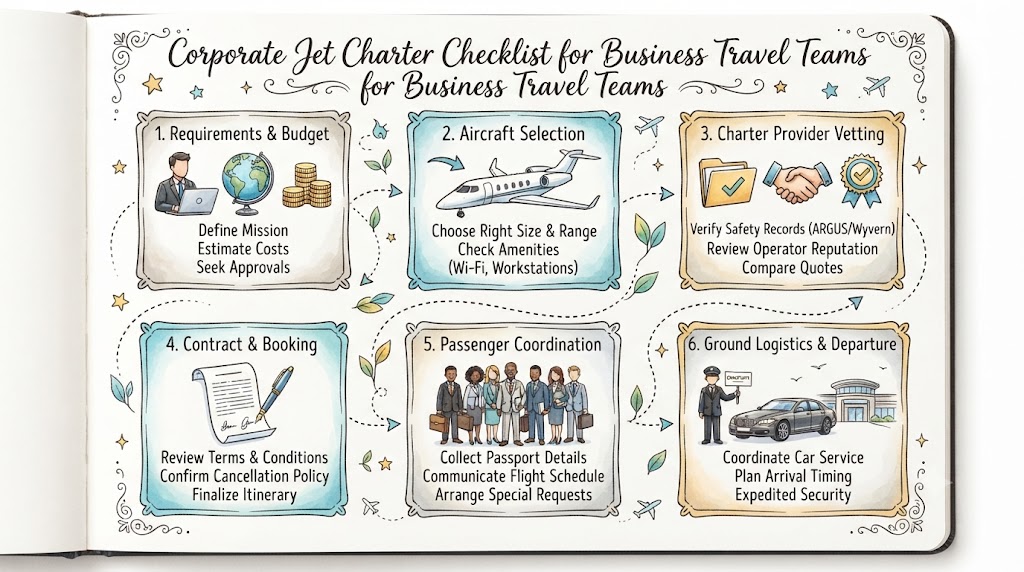
Corporate Jet Charter Planning Checklist
Successful executive travel begins long before departure.
Define Business Objectives
Clearly identify the purpose of the trip.
Consider:
- Meeting schedule
- Business priorities
- Passenger count
- Destination requirements
- Return itinerary
A well-defined travel plan helps operators recommend suitable aircraft and schedules.
Select the Right Aircraft
Different business trips require different aircraft capabilities.
Important considerations include:
- Passenger capacity
- Flight distance
- Cabin space
- Baggage requirements
- Workspace needs
Selecting the appropriate aircraft improves both comfort and operational efficiency.
Choose a Reliable Charter Operator
Choosing the right charter provider is one of the most important planning decisions.
Evaluate operators based on:
- Safety standards
- Operational experience
- Fleet quality
- Aircraft maintenance
- Customer support
- Industry reputation
Working with a trusted operator helps support a reliable travel experience.
Corporate Travel Team Checklist Before Departure
Confirm Flight Details
Before departure, verify:
- Departure airport
- Arrival airport
- Flight schedule
- Passenger manifest
- Emergency contact information
Reviewing these details helps avoid unnecessary last-minute issues.
Prepare Business Documentation
Organize important documents before leaving.
These may include:
- Government-issued identification
- Passports
- Visa documentation
- Meeting agendas
- Contracts
- Business presentations
Keeping documents readily available improves travel efficiency.
Coordinate Ground Transportation
Business travel continues after landing.
Arrange transportation in advance, including:
- Executive chauffeur services
- Hotel transfers
- Office transportation
- Client meeting transportation
Well-planned logistics reduce delays between appointments.
Organize Business Equipment
Prepare all necessary business equipment before departure.
Recommended items include:
- Laptops
- Chargers
- Tablets
- Mobile phones
- Presentation equipment
- Backup storage devices
- Business cards
Ensuring equipment is ready helps teams remain productive.
Verify International Travel Requirements
For international business trips, review:
- Passport validity
- Visa requirements
- Customs documentation
- Entry regulations
- Health documentation where applicable
Early verification helps avoid travel disruptions.
Onboard Productivity Checklist
Corporate jet travel offers valuable uninterrupted working time.
Conduct Team Meetings
Private cabins allow business teams to:
- Review project updates
- Discuss client strategies
- Plan presentations
- Coordinate upcoming meetings
Confidential discussions can continue throughout the journey.
Review Business Presentations
Executives can use travel time to:
- Finalize presentations
- Practice speeches
- Review meeting objectives
- Organize supporting documents
Preparation before arrival improves meeting readiness.
Stay Connected
Depending on aircraft equipment and available services, passengers may be able to:
- Communicate with colleagues
- Coordinate with clients
- Monitor business updates
- Respond to urgent requests
Staying connected helps maintain business continuity.
Strategic Planning
Travel time can also support:
- Financial reviews
- Business planning
- Project evaluations
- Executive decision-making
Using onboard time effectively increases overall productivity.
Security Best Practices for Corporate Travel
Business travelers often manage confidential information that requires additional protection.
Protect Confidential Information
Keep business documents secure throughout the journey.
Limit Sharing Travel Schedules
Avoid publicly discussing executive travel plans.
Travel details should only be shared with individuals involved in the trip.
Secure Electronic Devices
Protect laptops, smartphones, and tablets using passwords, encryption, and secure storage practices where appropriate.
Verify Passenger Manifest
Confirm that passenger information is accurate before departure.
Coordinate Executive Security
When additional security support is required, coordinate arrangements before travel begins.
Common Corporate Charter Planning Mistakes
Poor Schedule Coordination
Incomplete planning may create unnecessary travel delays.
Confirm all meeting schedules before booking flights.
Last-Minute Booking
Although private aviation offers flexibility, booking early generally provides more aircraft options and scheduling flexibility.
Forgetting Important Documents
Missing travel documents can delay important business trips.
Always verify documentation before departure.
Choosing Aircraft Only by Price
Selecting the least expensive option without considering passenger needs, safety standards, or operational capabilities may reduce overall travel efficiency.
Ignoring Ground Transportation
Poor transportation planning after arrival may affect business schedules.
Poor Team Communication
Ensure all passengers understand:
- Flight schedule
- Meeting itinerary
- Transportation arrangements
- Emergency contacts
Clear communication improves travel coordination.
Corporate Jet Charter Travel Checklist
Review this checklist before every corporate flight:
- Confirm itinerary
- Verify passenger manifest
- Confirm travel documentation
- Coordinate airport transportation
- Pack business equipment
- Prepare meeting materials
- Secure confidential business information
- Confirm catering requests
- Verify destination arrangements
- Review return travel schedule
Using a standardized checklist helps organizations maintain consistent travel planning.
Corporate Jet Charter vs Commercial Business Travel
| Factor | Corporate Jet Charter | Commercial Airline |
|---|---|---|
| Scheduling Flexibility | Customized departure and arrival times | Fixed airline schedules |
| Privacy | Exclusive cabin with confidential environment | Shared passenger cabin |
| Team Productivity | Supports meetings and business collaboration | Limited privacy for discussions |
| Airport Experience | Private terminals with streamlined procedures | Standard airport processing |
| Travel Efficiency | Direct routing where available | May involve layovers and waiting |
| Business Collaboration | Dedicated workspace for executive teams | Limited collaboration opportunities |
Technology Improving Corporate Aviation
Modern technology continues to improve executive travel management.
Digital Charter Booking Platforms
Online platforms simplify aircraft selection, booking, and itinerary management.
Real-Time Flight Tracking
Business teams can monitor aircraft status and arrival times more accurately.
Electronic Travel Documentation
Digital travel records simplify document management and reduce paperwork.
AI-Assisted Itinerary Planning
Advanced travel management platforms help organize executive schedules and improve travel coordination.
Secure Communication Platforms
Modern communication tools support confidential coordination between travelers, operators, and business teams.
Mobile Travel Management Applications
Mobile applications allow executives and travel managers to access important travel information from virtually anywhere.
Tips for Executive Travel Managers
Corporate travel managers can improve efficiency by following structured planning processes.
Helpful recommendations include:
- Maintain standardized travel checklists.
- Keep updated passenger profiles.
- Organize frequently used travel documents digitally.
- Coordinate with charter operators well in advance.
- Review travel schedules regularly.
- Maintain organized travel records.
- Evaluate completed trips to improve future planning.
Consistent travel management processes help reduce errors and improve overall efficiency.
Frequently Asked Questions
1. Why do companies use corporate jet charter services?
Corporate jet charters provide greater flexibility, privacy, efficiency, and productivity compared with many traditional travel options.
2. What should business teams prepare before a charter flight?
Prepare travel documents, passenger information, meeting materials, electronic devices, transportation arrangements, and business equipment.
3. How early should executives arrive for private charter flights?
Arrival times are generally shorter than commercial airline travel, but passengers should follow the guidance provided by their charter operator.
4. Can meetings be conducted onboard?
Yes. Private cabins provide an environment suitable for confidential meetings and business discussions.
5. How do corporate jet charters improve productivity?
Private charter flights allow teams to continue working during travel through meetings, planning sessions, and business preparation.
6. What documents are required for international charter travel?
Requirements may include passports, visas where applicable, customs documentation, and destination-specific entry requirements.
7. How do companies choose the right aircraft?
Organizations should consider passenger numbers, travel distance, baggage needs, cabin space, and business requirements.
8. Are private charter flights suitable for multi-city business trips?
Yes. Private charter services can support flexible itineraries that include multiple destinations, depending on operational planning.
9. How can executive assistants improve travel planning?
Executive assistants can maintain organized travel records, coordinate transportation, verify documentation, and communicate schedules clearly with all travelers.
10. What makes corporate jet charter more efficient than commercial travel?
Corporate jet charter offers customized scheduling, streamlined airport procedures, enhanced privacy, greater productivity, and improved travel flexibility.
Conclusion
Successful executive travel depends on careful planning, efficient coordination, and attention to detail. A structured corporate jet charter checklist helps business teams organize every stage of the journey—from selecting the right aircraft and preparing travel documents to coordinating ground transportation and maximizing onboard productivity.
Corporate jet charter services provide organizations with greater flexibility, enhanced privacy, faster airport experiences, and an environment where executives can continue working while traveling. These advantages help businesses make better use of valuable time and respond quickly to changing priorities.
