
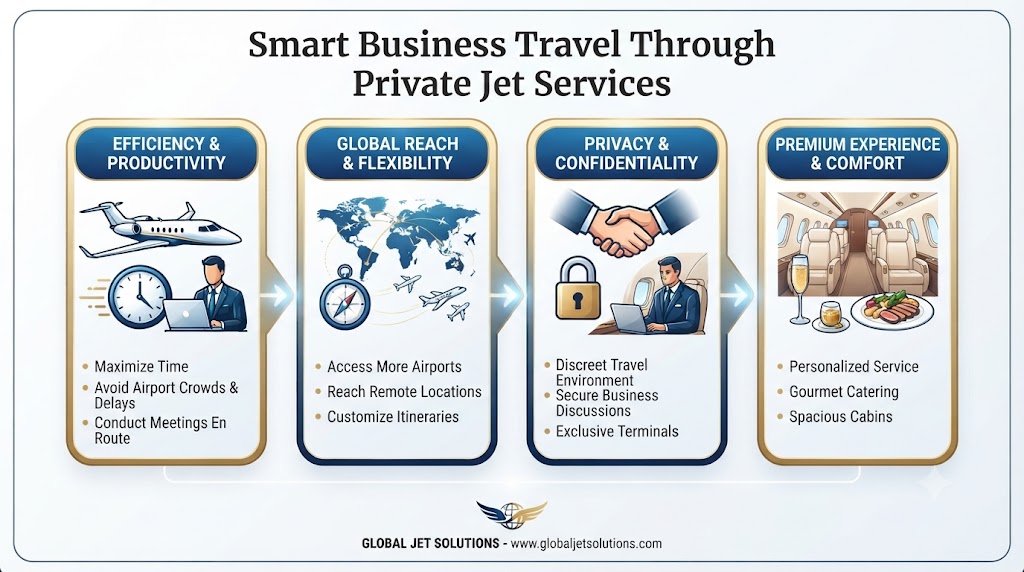
Introduction
Business travel plays an important role in building client relationships, managing projects, attending meetings, and exploring new opportunities. However, traditional air travel can sometimes make business trips difficult. Long airport queues, fixed schedules, flight delays, missed connections, and crowded terminals can waste valuable time.
For business leaders, senior executives, investors, and corporate teams, time is often more important than the cost of travel. A delayed flight can lead to a missed meeting, lost opportunity, or unnecessary overnight stay.
Private jet services offer a more flexible and efficient way to travel. They allow business travelers to choose suitable schedules, reach more airports, reduce waiting time, and remain productive during the journey.
What Are Private Jet Services?
Private jet services allow individuals or companies to hire an aircraft for a specific journey. Unlike commercial airlines, where passengers travel according to fixed schedules, private aviation offers greater control over departure time, route, and travel arrangements.
A private aircraft can be selected based on:
- Number of passengers
- Travel distance
- Departure and arrival locations
- Baggage requirements
- Cabin preferences
- Business schedule
- Budget
Private jet travel is often connected with luxury, but it can also be a practical business solution. For companies that need to move executives, specialists, or project teams quickly, private aviation can save time and improve efficiency.
Why Traditional Business Travel Can Be Difficult
Commercial airlines are useful for many journeys, but they may not always match the needs of busy executives.
Fixed Flight Schedules
Commercial flights operate according to airline timetables. Business travelers must adjust their meetings and plans around available departure times.
Long Airport Procedures
Passengers may need to arrive hours before departure. Check-in, security screening, baggage handling, and boarding can take a significant amount of time.
Delays and Cancellations
Weather, operational issues, and airport congestion can delay flights. These disruptions may affect important meetings and business commitments.
Connecting Flights
Some destinations require one or more flight connections. This increases travel time and creates a greater risk of missed connections.
Limited Privacy
Commercial cabins and busy terminals do not always provide a suitable environment for confidential conversations or focused work.
Difficult Last-Minute Changes
Changing a commercial flight can be expensive or difficult, especially during busy travel periods.
Private jet services help reduce many of these challenges by offering more control over the journey.
How Private Jets Save Valuable Business Time
Time saving is one of the main reasons companies consider private aviation.
Faster Airport Experience
Private aviation often uses separate terminals or smaller airport facilities. This can reduce waiting time before departure.
Direct Travel
Private jets may fly directly to destinations that would otherwise require connecting commercial flights.
Access to Smaller Airports
Private aircraft can often use regional airports located closer to business sites, factories, client offices, or remote project locations.
Same-Day Return Trips
Executives may be able to attend a meeting in another city and return home on the same day. This can reduce hotel costs and time away from the office.
Flexible Departure Times
Travelers can choose a schedule that matches their business plans instead of depending entirely on airline timetables.
For example, a management team may need to visit a manufacturing site in the morning and attend an investor meeting in another city later the same day. A private flight can make this type of schedule more practical.
Flexible Scheduling for Busy Executives
Business schedules can change quickly. Meetings may run longer than expected, new opportunities may appear, or urgent decisions may require immediate travel.
Private jet services provide greater flexibility in situations such as:
- Last-minute business meetings
- Schedule changes
- Urgent site visits
- Multiple-city trips
- Client emergencies
- Project inspections
- Investor roadshows
- Confidential negotiations
The ability to plan departure times around business requirements helps executives use their day more effectively.
However, flexibility still depends on aircraft availability, airport operating hours, crew rules, weather conditions, and aviation regulations.
Greater Productivity During the Journey
Travel time does not always need to be unproductive.
A private aircraft may provide a quieter and more controlled environment where passengers can:
- Review reports
- Prepare presentations
- Discuss business plans
- Hold team meetings
- Study contracts
- Plan negotiations
- Rest before an important meeting
- Work without common airport distractions
Some aircraft may also offer communication and connectivity facilities, depending on the aircraft type and service provider.
When senior team members travel together, they can use the journey to prepare for meetings and make decisions before arriving.
Privacy and Confidentiality
Privacy is important for many business travelers, particularly when a journey involves sensitive information.
Private aviation may offer a more suitable environment for:
- Legal discussions
- Investment planning
- Merger negotiations
- Financial reviews
- Product launch plans
- Board-level decisions
- Client information
- Confidential documents
Travelers face fewer public interactions, and the passenger list is more controlled than on a commercial flight.
Private aviation does not remove every security risk, but it can provide greater discretion and a more private travel setting.
Access to More Airports
Commercial airlines mainly operate between major airports. Private aircraft may be able to use a wider network of regional and smaller airports.
This can help business travelers reach:
- Industrial areas
- Manufacturing facilities
- Remote project sites
- Smaller cities
- Mining locations
- Construction projects
- Regional offices
- Client locations outside major cities
Landing closer to the final destination can reduce road travel and save several hours.
For example, reaching a smaller regional airport near a project site may be more efficient than landing at a major airport and driving for many hours.
Comfort That Supports Better Performance
Travel fatigue can affect concentration, decision-making, and professional performance.
Private aviation may offer:
- More personal space
- A quieter cabin
- Reduced crowding
- Flexible seating
- A calmer environment
- Better opportunities to rest
- Personalized travel arrangements
Comfort is not only about luxury. Arriving rested and prepared can help executives perform better during important meetings.
The exact cabin experience depends on the aircraft category and selected service.
Private Jet Travel for Business Teams
Private jet services can also support teams, not only individual executives.
Groups that may benefit include:
- Senior management teams
- Sales teams
- Legal professionals
- Technical specialists
- Engineers
- Investors
- Consultants
- Project managers
- Event teams
- Emergency response teams
Traveling together helps team members follow the same schedule and coordinate during the journey.
It may also be easier to transport special equipment, documents, or business materials, depending on aircraft capacity and aviation rules.
When Private Jet Services Make Business Sense
Private aviation may be especially useful when time, access, or privacy is critical.
Common situations include:
Urgent Business Meetings
A private flight may help executives reach a destination when commercial options are limited.
Multiple-City Trips
Business leaders can visit several destinations according to a customized schedule.
Remote Locations
Private aircraft may provide easier access to regional airports near industrial or project sites.
Confidential Negotiations
A private cabin offers a more controlled environment for sensitive discussions.
Executive Roadshows
Investors and management teams may need to visit several cities within a short period.
Site Inspections
Technical teams may need to reach factories, construction sites, or energy projects quickly.
Product Launches and Events
Companies can coordinate travel for senior leaders or important team members.
Private jet travel may not be necessary for every journey. Companies should evaluate the business value, schedule, destination, and number of travelers before making a decision.
Understanding the Cost of Private Jet Travel
The cost of a private flight can depend on several factors.
These may include:
- Aircraft category
- Flight distance
- Number of passengers
- Airport charges
- Crew requirements
- Aircraft positioning
- Waiting time
- Ground handling
- Travel dates
- Additional services
The direct cost is usually higher than a commercial airline ticket. However, businesses should consider the complete value of the journey.
This includes:
- Working hours saved
- Meetings completed
- Overnight stays avoided
- Ground travel reduced
- Employee productivity
- Schedule flexibility
- Business opportunities protected
When several executives travel together, the cost should also be considered across the whole group rather than only per passenger.
Choosing the Right Aircraft
The correct aircraft depends on the requirements of the journey.
Light Jets
Light jets are commonly suited to shorter routes and smaller groups. They may offer an efficient option for regional business travel.
Midsize Jets
Midsize jets generally provide more cabin space and may support longer journeys.
Super-Midsize Jets
These aircraft may offer greater range, larger cabins, and more comfort for longer business trips.
Heavy Jets
Heavy jets are often used for long-distance or international journeys involving larger groups or greater cabin requirements.
Turboprop Aircraft
Turboprops may be suitable for shorter routes and airports with smaller runways. They can be practical for reaching regional destinations.
Aircraft selection should consider:
- Passenger count
- Travel distance
- Runway conditions
- Baggage
- Cabin requirements
- Budget
- Destination
- Schedule
A professional aviation provider can help match the aircraft to the journey.
How to Plan a Smart Private Jet Business Trip
1. Confirm the Travel Purpose
Understand why the trip is required and how urgent it is.
2. Finalize Passenger Details
Prepare the names, identification information, and requirements of all travelers.
3. Select Suitable Airports
Consider airports close to both the departure point and final destination.
4. Share Preferred Dates and Times
Provide the desired schedule while allowing flexibility where possible.
5. Explain Baggage Requirements
Inform the provider about luggage, equipment, or special business materials.
6. Compare Aircraft Options
Review aircraft size, range, passenger capacity, and cabin features.
7. Review the Full Quotation
Understand all included charges and possible additional costs.
8. Check Operator Information
Review relevant operator details, aircraft information, and required documentation.
9. Arrange Ground Transportation
Coordinate airport transfers, cars, drivers, or local transportation.
10. Prepare a Backup Plan
Weather and operational conditions can still affect private flights.
11. Reconfirm Travel Details
Verify the schedule, airport location, passenger information, and documentation.
12. Keep Documents Ready
Carry valid identification, permits, visas, and other required travel documents.
Safety and Professional Standards
Safety should remain the highest priority during private aviation planning.
Businesses should consider:
- Operator credentials
- Required aviation approvals
- Crew experience
- Aircraft maintenance
- Insurance
- Safety procedures
- Flight documentation
- Weather planning
- Airport suitability
- Operational support
Travelers should avoid choosing a provider only because of a low price. Professional standards, transparency, and operational reliability are equally important.
Common Misunderstandings About Private Jets
Private Jets Are Only for Celebrities
Private aviation is also used by companies, project teams, investors, government officials, medical teams, and technical professionals.
Private Aviation Is Only About Luxury
Comfort is one benefit, but time saving, flexibility, privacy, and airport access are often more important for business travelers.
Every Aircraft Offers the Same Experience
Aircraft differ in size, range, baggage capacity, cabin layout, and available facilities.
Private Flights Can Depart Without Procedures
Private aviation still follows safety, security, documentation, airport, and regulatory requirements.
Private Jets Are Right for Every Business Trip
Commercial travel may remain more practical for many journeys. The decision depends on urgency, destination, group size, and business value.
Schedules Can Always Be Changed Without Limits
Changes may be possible, but they still depend on aircraft availability, crew duty limits, weather, airport slots, and operational conditions.
How Technology Supports Private Aviation
Technology has made private flight planning more organized and transparent.
It may support:
- Flight enquiries
- Aircraft comparisons
- Digital quotations
- Route planning
- Passenger updates
- Document sharing
- Schedule coordination
- Ground transportation planning
- Real-time communication
- Travel management
Digital tools help travelers and aviation teams share information quickly and reduce planning errors.
Commercial Business Travel vs Private Jet Travel
| Travel Factor | Commercial Business Travel | Private Jet Business Travel |
|---|---|---|
| Schedule | Based on airline timetable | Greater schedule flexibility |
| Airport process | Longer public airport procedures | More streamlined experience |
| Routes | Limited by airline networks | More direct route possibilities |
| Airport access | Mainly major airports | May include regional airports |
| Privacy | Shared public environment | More controlled environment |
| Productivity | Limited working conditions | Better space for business tasks |
| Flight changes | May be difficult or costly | May offer greater flexibility |
| Team coordination | Team members may travel separately | Team can travel together |
| Direct cost | Usually lower | Usually higher |
| Travel experience | Standardized | More personalized |
The actual experience depends on the route, aircraft, operator, airport, weather, and agreed service conditions.
Business Travel Checklist
Before confirming a private business flight, check the following:
- Travel purpose
- Passenger names
- Identification documents
- Departure airport
- Destination airport
- Preferred schedule
- Meeting timings
- Baggage requirements
- Aircraft suitability
- Ground transportation
- Hotel arrangements
- Special passenger needs
- Full quotation
- Operator information
- Backup travel plan
- Emergency contacts
How jetexe.in Supports Smarter Business Travel
Businesses exploring private aviation can use jetexe.in to learn more about private jet travel and suitable aviation solutions.
Professional support can help companies understand aircraft options, plan routes, coordinate schedules, and organize important business journeys more efficiently.
By considering the purpose, destination, passenger needs, and business value of each trip, companies can make better travel decisions.
Frequently Asked Questions
1. What is a private jet service?
A private jet service allows an individual or company to hire an aircraft for a specific journey. The schedule and route can be planned according to the passenger’s requirements.
2. How can private jets improve business travel?
Private jets can reduce airport waiting time, provide flexible scheduling, offer direct travel, support privacy, and help passengers remain productive.
3. Are private jets suitable for corporate teams?
Yes. Private aircraft can be useful for management teams, engineers, consultants, sales teams, and other groups that need to travel together.
4. How much does a private jet business trip cost?
The cost depends on aircraft type, route, distance, passenger count, airport fees, crew requirements, aircraft positioning, and additional services.
5. Can private jets use smaller airports?
Many private aircraft can use regional airports that may not be regularly served by commercial airlines. Airport suitability depends on runway, aircraft, and operational conditions.
6. How early should a private jet be booked?
Booking early usually provides more aircraft choices. However, urgent trips may also be arranged depending on availability and operational requirements.
7. Can a private flight schedule be changed?
Changes may be possible, but they depend on aircraft availability, crew duty limits, weather, airport timings, and other operational factors.
8. What details are needed for a private jet quotation?
Travelers usually need to provide the route, date, preferred time, passenger count, baggage information, and any special requirements.
9. How should a company select a private aviation provider?
Companies should review professionalism, transparency, operator information, aircraft suitability, support, safety standards, and complete pricing.
10. Is private jet travel suitable for every business journey?
No. Commercial flights may be more practical for many trips. Private aviation is most useful when time, flexibility, privacy, group coordination, or airport access provides clear business value.
Conclusion
Smart business travel is about making the best use of time, resources, and opportunities. Private jet services can help executives and corporate teams travel with greater flexibility, privacy, comfort, and efficiency.
Direct routes, access to regional airports, reduced waiting times, and customized schedules can make complex business journeys easier to manage. Private aviation can also provide a more productive environment for teams that need to prepare, communicate, or make decisions while traveling.
Businesses should evaluate each journey carefully and compare the complete value of the trip, including time saved, meetings completed, and productivity protected.
