
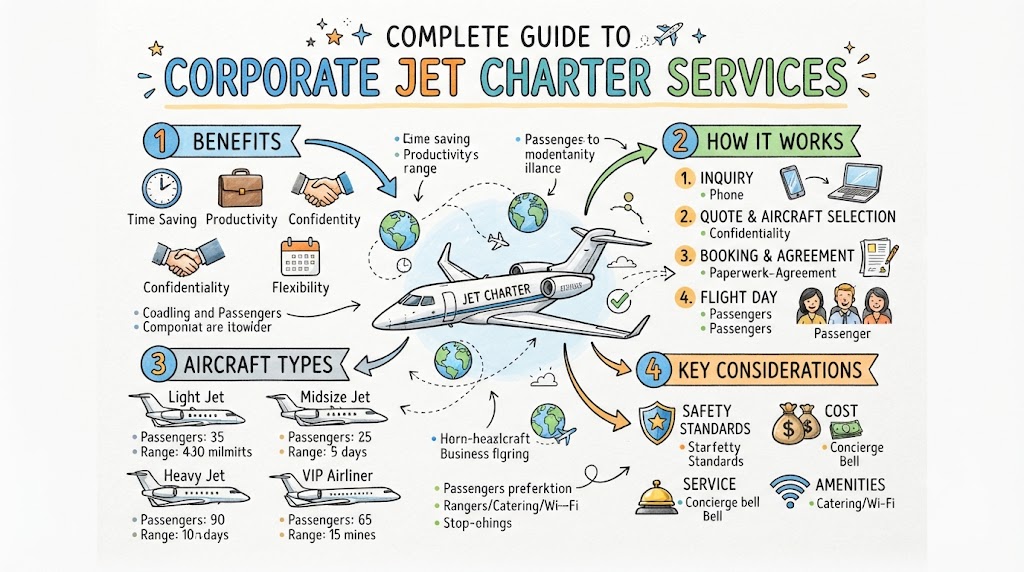
Introduction
Business travel plays a critical role in modern organizations. Executives, entrepreneurs, and corporate teams often need to visit clients, attend meetings, inspect facilities, meet investors, and manage operations across different locations. While commercial airlines serve millions of travelers every day, traditional air travel does not always meet the changing needs of businesses that require flexibility, efficiency, and better control over their schedules.
Corporate jet charter services provide an alternative approach to business aviation by allowing companies to arrange private aircraft travel based on their specific requirements. Instead of following fixed airline schedules, executives can plan flights around their business priorities, reducing unnecessary travel complexity and improving productivity.
Corporate aviation is not only about comfort. For many organizations, it is a strategic tool that helps executives save valuable time, maintain privacy, improve operational efficiency, and respond quickly to important business opportunities.
What Are Corporate Jet Charter Services?
Corporate jet charter services allow businesses and executives to hire private aircraft for specific journeys without owning an aircraft.
Unlike commercial airline travel, where passengers purchase individual seats on scheduled routes, charter services provide access to an entire aircraft based on the company’s travel requirements.
A corporate charter arrangement allows businesses to choose:
- Departure locations
- Travel schedules
- Aircraft categories
- Passenger arrangements
- Routes
- Additional travel services
Corporate jet charter services are commonly used by:
- Business executives
- Company leadership teams
- Entrepreneurs
- Investors
- Corporate departments
- International business travelers
- High-value clients
The primary goal is to create a more efficient and flexible travel experience.
Corporate Jet Charter vs Aircraft Ownership
Businesses considering private aviation often compare charter services with aircraft ownership.
Aircraft Ownership
Owning an aircraft provides maximum control but also involves significant responsibilities, including:
- Aircraft maintenance
- Crew management
- Insurance
- Storage
- Operational expenses
- Regulatory requirements
Corporate Jet Charter
Charter services allow companies to access private aviation benefits without managing aircraft ownership responsibilities.
Advantages include:
- No aircraft purchase requirement
- Flexible usage
- Access to different aircraft types
- Professional operational support
- Reduced management responsibilities
For many organizations, charter services provide the flexibility of private aviation without the complexity of ownership.
Why Businesses Choose Corporate Jet Charter Services
Improved Time Efficiency
Time is one of the most valuable resources for executives.
Commercial travel often includes:
- Long airport procedures
- Connecting flights
- Waiting periods
- Limited schedule options
Corporate charter flights allow businesses to create travel plans that better match their schedules.
Benefits include:
- More efficient departures
- Reduced waiting time
- Better meeting coordination
- Improved business productivity
Flexible Scheduling
Business plans can change quickly.
Corporate charter services provide greater scheduling flexibility compared with commercial airlines.
Executives can:
- Plan flights around meetings
- Adjust travel times
- Create customized itineraries
- Manage urgent business trips
This flexibility helps companies respond more effectively to business needs.
Access to More Airports
Commercial airlines usually operate from major airports, but private aircraft can often access a wider range of airports.
This provides advantages such as:
- Getting closer to business locations
- Reducing ground travel time
- Supporting regional business visits
- Improving trip efficiency
For executives visiting multiple locations, airport flexibility can significantly improve travel planning.
Increased Productivity
Corporate travel does not have to mean lost working hours.
A private aircraft environment allows executives to use travel time productively.
Passengers can:
- Review business documents
- Conduct internal discussions
- Prepare presentations
- Plan strategies
- Communicate with teams
- Review upcoming meetings
The aircraft becomes a private workspace where executives can continue important activities.
Enhanced Privacy
Business leaders often handle sensitive information related to:
- Investments
- Partnerships
- Contracts
- Corporate strategies
- Client relationships
Corporate charter flights provide a more controlled environment compared with public commercial travel.
Privacy benefits may include:
- Private cabins
- Limited passenger access
- Reduced public exposure
- More suitable space for business conversations
While no travel method can guarantee complete confidentiality, private aviation offers an environment designed for greater discretion.
How Corporate Jet Charter Services Work
The charter process typically involves several important steps.
Step 1: Understanding Travel Requirements
The charter provider evaluates:
- Destination
- Passenger numbers
- Travel dates
- Schedule requirements
- Aircraft needs
Step 2: Selecting the Right Aircraft
Aircraft selection depends on:
- Distance
- Passenger capacity
- Comfort requirements
- Baggage needs
- Route considerations
Step 3: Planning the Flight Route
The provider manages:
- Airport selection
- Flight scheduling
- Operational planning
- Required permissions
Step 4: Passenger Coordination
Travel arrangements may include:
- Passenger details
- Ground transportation
- Special requests
- Travel support
Step 5: Flight Operations
Professional crews manage:
- Aircraft preparation
- Safety procedures
- Flight execution
- Passenger service
Types of Corporate Charter Aircraft
Different business trips require different aircraft capabilities.
Light Jets
Light jets are commonly used for shorter business trips and smaller groups.
Suitable for:
- Regional travel
- Executive meetings
- Short-distance routes
- Small teams
Benefits:
- Efficient operation
- Access to smaller airports
- Comfortable executive travel
Midsize Jets
Midsize jets provide additional cabin space and longer-range capability.
Suitable for:
- Longer business routes
- Larger executive groups
- More comfortable travel
Benefits:
- Increased workspace
- Greater passenger comfort
- Improved range
Heavy Jets
Heavy jets are designed for longer journeys and larger groups.
Suitable for:
- International business travel
- Executive teams
- Long-distance flights
Benefits:
- Larger cabins
- Extended range
- Enhanced comfort
Turboprops
Turboprops are practical for regional operations and destinations with smaller airports.
Suitable for:
- Short regional routes
- Remote locations
- Business site visits
Corporate Travel Situations Where Charter Services Help
Executive Meetings
Leaders can travel efficiently to important meetings without being restricted by airline schedules.
Investor Meetings
Private aviation supports efficient travel for investment discussions and business presentations.
Factory and Site Visits
Executives can reach operational locations more conveniently.
Multi-City Business Trips
Charter aircraft can support complex itineraries involving multiple destinations.
Emergency Business Travel
When urgent travel is required, charter services may provide additional scheduling options.
International Negotiations
Executives traveling for important negotiations benefit from improved flexibility and planning.
Safety and Operational Standards
Safety remains the most important consideration in business aviation.
Professional charter providers focus on:
- Aircraft maintenance standards
- Qualified flight crews
- Operational procedures
- Safety management practices
- Regulatory compliance
- Proper flight planning
Businesses should evaluate a provider’s safety culture and operational experience before selecting a charter partner.
Cost Considerations of Corporate Jet Charter Services
The cost of charter flights depends on several factors, including:
- Aircraft type
- Travel distance
- Flight duration
- Passenger requirements
- Airport charges
- Additional services
- Operational needs
Instead of considering only the flight price, businesses should evaluate the overall value created through:
- Time savings
- Executive productivity
- Better scheduling
- Reduced travel complexity
- Improved business efficiency
Corporate Jet Charter vs Commercial Airlines
| Feature | Commercial Airlines | Corporate Jet Charter |
|---|---|---|
| Scheduling | Fixed airline schedules | Flexible planning |
| Aircraft Choice | Limited | Multiple aircraft options |
| Airport Access | Mainly major airports | Wider airport availability |
| Privacy | Shared passenger environment | More controlled environment |
| Productivity | Limited workspace | Better working environment |
| Travel Customization | Limited | Personalized planning |
| Boarding Process | Standard procedures | More streamlined |
| Multi-City Travel | More complex | Easier coordination |
| Executive Convenience | Standard service | Customized experience |
| Passenger Control | Public travel environment | Private passenger group |
| Route Flexibility | Limited | More adaptable |
| Business Meetings | Difficult | More practical |
| Ground Transportation | Standard | Can be coordinated |
| Time Management | Less control | Greater control |
| Overall Experience | Standardized | Business-focused |
How to Choose the Right Corporate Jet Charter Provider
Selecting the right aviation partner is an important decision.
Businesses should consider:
Safety Reputation
Look for providers that prioritize operational safety and professional standards.
Aircraft Availability
A strong fleet selection helps match aircraft to different business requirements.
Experience
Experienced providers understand executive travel needs.
Customer Support
Reliable communication improves the overall travel experience.
Transparent Process
Clear information about services and costs helps businesses make informed decisions.
Common Mistakes Businesses Should Avoid
Choosing Only Based on Price
The cheapest option may not always provide the best operational value.
Ignoring Safety Standards
Safety should always remain the highest priority.
Poor Trip Planning
Early planning helps ensure better aircraft availability and smoother operations.
Selecting the Wrong Aircraft
Aircraft choice should match passenger numbers, distance, and travel requirements.
Lack of Communication
Clear communication between the company and charter provider improves efficiency.
How to Plan an Efficient Corporate Charter Trip
Businesses can improve their travel experience by:
- Defining travel objectives clearly
- Selecting the right aircraft
- Planning schedules carefully
- Considering passenger requirements
- Coordinating transportation
- Preparing necessary documents
- Maintaining communication with the provider
Future of Corporate Aviation
Corporate aviation continues to evolve with:
- Digital booking solutions
- Improved aircraft technology
- More personalized travel services
- Better operational planning tools
- Increased focus on efficiency and sustainability
As businesses become more global, flexible aviation solutions continue to support faster and smarter executive mobility.
Frequently Asked Questions
1. What are corporate jet charter services?
Corporate jet charter services allow companies to hire private aircraft for business travel without owning an aircraft.
2. Who uses corporate charter flights?
Executives, entrepreneurs, corporations, investors, and business teams commonly use charter aviation for efficient travel.
3. Are corporate charter flights better than commercial airlines?
For certain business needs, charter flights provide advantages such as flexibility, privacy, and improved scheduling control.
4. What types of aircraft are available?
Businesses can choose from light jets, midsize jets, heavy jets, and turboprops depending on their travel requirements.
5. Are charter flights suitable for international travel?
Yes, certain aircraft types are designed for longer international business routes.
6. Can executives work during charter flights?
Yes, the private cabin environment allows executives to work, hold discussions, and prepare for meetings.
7. How much do corporate charter flights cost?
Costs vary depending on aircraft type, distance, duration, and additional services required.
8. How do companies select a charter provider?
Companies should evaluate safety standards, experience, aircraft options, customer service, and operational reliability.
9. Are charter flights more private?
Charter flights generally provide a more controlled travel environment compared with commercial flights.
10. Why do companies choose corporate aviation?
Companies choose corporate aviation to improve efficiency, flexibility, productivity, and executive travel management.
Conclusion
Corporate jet charter services provide businesses with a smarter approach to modern executive travel. By offering flexibility, improved productivity, greater privacy, and access to more destinations, charter aviation helps organizations manage their travel requirements more efficiently.
For companies where time, decision-making, and operational efficiency matter, private aviation can become a valuable business tool. Choosing the right aircraft and aviation partner allows executives to focus more on business priorities and less on transportation challenges.
