
Introduction
In today’s interconnected world, privacy has become increasingly valuable. Business leaders discuss sensitive strategies, investors negotiate major transactions, celebrities seek protection from unwanted attention, and families prioritize personal security while traveling. As information travels faster than ever through digital platforms and social media, maintaining confidentiality has become a critical concern for many travelers.
Commercial air travel, while convenient for the general public, often exposes passengers to crowded terminals, shared cabins, public boarding areas, and limited privacy. For individuals handling confidential information or requiring discretion, these environments may create unnecessary risks.
Private jet travel offers a fundamentally different experience. Beyond luxury and convenience, one of its most important advantages is confidentiality. From private terminals and controlled access to secure onboard environments, private aviation helps protect sensitive information, personal privacy, and professional interests.
This article explores why confidentiality matters in private jet travel and how private aviation provides a secure and discreet travel solution for modern travelers.
The Growing Importance of Privacy in Modern Travel
Privacy concerns have evolved significantly over the past decade.
Modern travelers are increasingly aware that information can be shared, photographed, recorded, or distributed instantly. This reality affects both personal and professional travel.
Why Travelers Are More Concerned About Privacy
Several factors contribute to growing privacy concerns:
- Digital exposure
- Social media visibility
- Competitive business environments
- Personal security risks
- Identity protection concerns
- Increased public scrutiny
Individuals and organizations now place greater value on controlling who has access to their movements, conversations, and travel schedules.
Privacy Challenges in Commercial Air Travel
Commercial airline environments often present several privacy limitations.
Crowded Airports
Large numbers of travelers create constant public exposure.
Shared Cabins
Passengers travel alongside strangers for extended periods.
Public Boarding Areas
Travel schedules and movements can become visible to others.
Limited Personal Control
Travelers have little influence over who sits nearby or overhears conversations.
These factors can create challenges for individuals who require discretion.
What Confidentiality Means in Private Jet Travel
Confidentiality in private aviation refers to protecting a passenger’s personal information, travel details, communications, and activities from unnecessary exposure.
It involves creating a secure environment where passengers can travel, communicate, and conduct business without unwanted attention.
Key Components of Travel Confidentiality
Passenger Privacy
Protecting traveler identities and schedules.
Secure Communications
Providing an environment suitable for confidential discussions.
Restricted Access
Limiting access to authorized personnel only.
Controlled Travel Environment
Reducing public exposure throughout the journey.
Discreet Operations
Managing travel arrangements professionally and confidentially.
These elements combine to create a highly private travel experience.
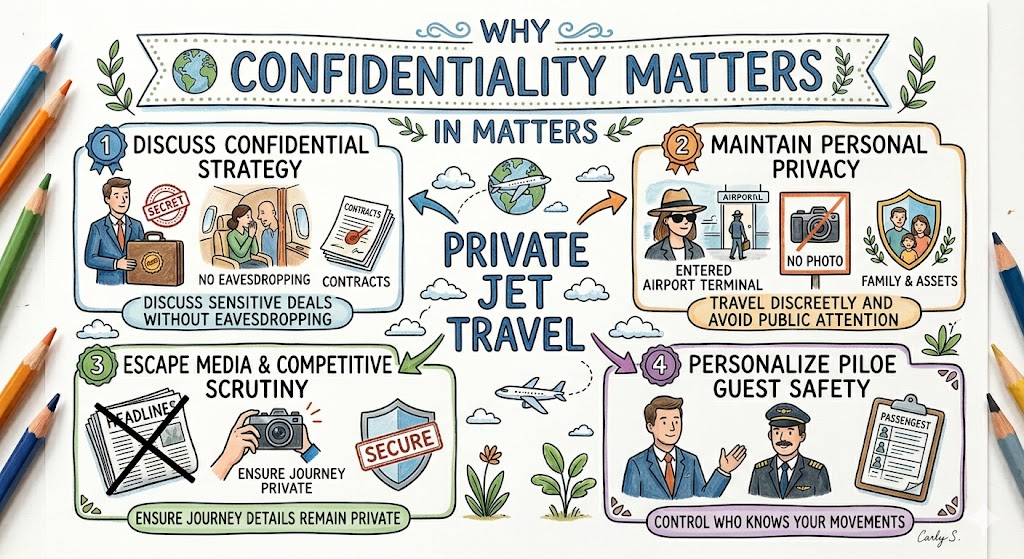
Why Confidentiality Matters in Private Jet Travel
1. Protection of Sensitive Business Information
Business leaders frequently travel while managing important projects, negotiations, and strategic initiatives.
Many discussions involve confidential information that could affect organizations, investors, and markets.
Confidential Meetings
Private jets allow executives to hold discussions without concern about nearby passengers overhearing conversations.
Strategic Planning Sessions
Leadership teams can review company strategies while traveling.
Financial Transactions
Investment discussions often require confidentiality.
Merger and Acquisition Planning
Corporate transactions frequently involve sensitive information that must remain private until officially announced.
Business Travel Security Benefits
| Benefit | Business Impact |
|---|---|
| Private Environment | Secure Discussions |
| Controlled Access | Reduced Exposure |
| Flexible Scheduling | Confidential Movements |
| Dedicated Cabin | Improved Collaboration |
| Limited Public Visibility | Enhanced Privacy |
For many organizations, confidentiality directly supports business success.
2. Enhanced Personal Privacy
Privacy is not only important for corporations. Individuals also value discretion when traveling.
Protection from Public Attention
Many travelers prefer to keep their movements private.
Celebrity and VIP Privacy
Public figures often face constant attention from media and fans.
Private aviation helps reduce visibility and unwanted interactions.
Family Privacy
Families traveling with children often appreciate a more secure and controlled environment.
Reduced Media Exposure
Private terminals and discreet boarding procedures help minimize public visibility.
This level of privacy allows passengers to focus on their journey rather than managing unwanted attention.
3. Secure Travel Environment
Confidentiality is closely connected to security.
Private aviation offers multiple layers of control that contribute to a safer and more private experience.
Private Terminals
Many private jet travelers use dedicated facilities separate from commercial terminals.
Limited Passenger Access
Only authorized individuals have access to the aircraft.
Controlled Aircraft Access
Passenger movements are managed carefully.
Verified Crew Operations
Professional crews follow established procedures designed to protect passenger interests.
These measures create an environment where privacy can be maintained more effectively.
4. Confidential Communications During Flight
Many business decisions cannot wait until arrival.
Private jet cabins function as productive workspaces where conversations can occur without concern about nearby strangers.
Onboard Business Discussions
Executives can discuss strategic initiatives privately.
Secure Conversations
The dedicated cabin environment reduces the likelihood of conversations being overheard.
Private Meeting Space
Teams can review documents, presentations, and plans while traveling.
Productivity Benefits
Travel time becomes productive time rather than lost time.
This capability is particularly valuable for professionals managing complex projects.
5. Reduced Risk of Information Leaks
Information leaks can create significant consequences.
Private aviation helps reduce exposure by minimizing contact with large public environments.
Avoiding Public Spaces
Smaller facilities reduce unnecessary interactions.
Restricted Passenger Access
There are no unrelated passengers sharing the cabin.
Lower Exposure Risks
Private travel minimizes opportunities for observation.
Greater Operational Control
Travel plans remain more closely managed.
While no travel method guarantees complete secrecy, private aviation substantially reduces exposure risks.
Confidentiality Benefits for Different Types of Travelers
Corporate Executives
Protect strategic discussions, financial information, and business plans.
Entrepreneurs
Maintain confidentiality regarding partnerships, investments, and growth strategies.
Government Officials
Support secure transportation and official responsibilities.
Celebrities
Reduce public exposure and unwanted media attention.
Professional Athletes
Travel discreetly while managing demanding schedules.
High-Net-Worth Families
Enhance privacy and personal security.
Legal and Financial Professionals
Protect client information and confidential case discussions.
Each traveler group benefits from confidentiality in different ways.
How Private Jet Operators Protect Passenger Confidentiality
Professional operators understand that confidentiality is a core expectation.
Staff Training
Employees are trained to maintain professional discretion.
Confidentiality Protocols
Operational procedures often include privacy-focused guidelines.
Secure Booking Procedures
Passenger information is handled carefully.
Passenger Verification
Access is restricted to authorized individuals.
Private Flight Handling
Flight operations prioritize discretion.
Data Protection Practices
Information management procedures help protect passenger data.
These practices contribute to a more secure travel experience.
Private Jet Travel vs Commercial Airline Privacy
Privacy Comparison Table
| Feature | Commercial Airline | Private Jet |
|---|---|---|
| Shared Cabin | Yes | No |
| Public Boarding | Yes | Minimal |
| Passenger Privacy | Limited | High |
| Confidential Meetings | Difficult | Easy |
| Schedule Discretion | Limited | Greater Control |
| Media Exposure | Higher | Lower |
| Access Control | Shared Environment | Controlled Environment |
The differences highlight why privacy-conscious travelers often prefer private aviation.
Real-World Situations Where Confidentiality Matters
Corporate Negotiations
Executives traveling to finalize important agreements require secure environments.
Legal Case Preparation
Attorneys may need to review sensitive information while traveling.
Government Travel
Officials often manage confidential responsibilities during transit.
Celebrity Tours
Public figures seek protection from constant public attention.
Executive Site Visits
Business leaders may travel to evaluate opportunities confidentially.
Family Security Concerns
Families often value privacy for safety and comfort reasons.
These examples illustrate the practical importance of confidentiality.
The Relationship Between Privacy and Productivity
Confidentiality supports productivity in several ways.
Fewer Distractions
Passengers can focus on important work.
Better Decision-Making
Private discussions encourage open communication.
Efficient Use of Travel Time
Meetings can continue during flights.
Mobile Office Environment
Aircraft cabins often function as productive workspaces.
For many professionals, privacy directly contributes to operational efficiency.
Common Misconceptions About Private Jet Confidentiality
Privacy Is Only Important for Celebrities
Many business professionals and families also require discretion.
Confidential Travel Is Only for Large Corporations
Organizations of all sizes benefit from protecting sensitive information.
Private Jets Guarantee Complete Anonymity
While private aviation enhances privacy, absolute anonymity cannot be guaranteed.
Security and Privacy Are the Same Thing
Security focuses on protection from threats, while privacy focuses on controlling information exposure.
Understanding these differences helps travelers make informed decisions.
Key Factors to Consider When Choosing a Private Jet Provider
Reputation
Work with established operators known for professionalism.
Security Standards
Review operational procedures and safety practices.
Crew Professionalism
Experienced crews understand the importance of discretion.
Privacy Policies
Evaluate how passenger information is handled.
Operational Experience
Long-term industry experience often reflects mature procedures.
Customer Support
Responsive service helps ensure smooth travel arrangements.
Selecting the right provider plays a significant role in protecting confidentiality.
Future Trends in Confidential Private Aviation
The private aviation industry continues to evolve.
Advanced Data Protection
Enhanced systems help secure passenger information.
Digital Security Enhancements
Technology is improving communication protection.
AI-Based Security Monitoring
Intelligent systems can support operational security.
Secure Communication Technologies
New tools enable safer information exchange.
Growing Demand for Privacy-Focused Travel
Travelers increasingly prioritize confidentiality when selecting transportation options.
These trends indicate that privacy will remain a major focus within private aviation.
Best Practices for Travelers Seeking Maximum Confidentiality
Choose Reputable Operators
Work with providers known for professionalism and discretion.
Communicate Privacy Requirements
Clearly discuss expectations before travel.
Limit Information Sharing
Share travel details only when necessary.
Use Secure Communication Methods
Protect sensitive information during planning and travel.
Review Privacy Policies
Understand how your information will be managed.
These practices help maximize privacy benefits.
Frequently Asked Questions
1- Why is confidentiality important in private jet travel?
Confidentiality helps protect personal information, business discussions, travel schedules, and sensitive communications from unnecessary exposure.
2- How do private jets protect passenger privacy?
Private jets use dedicated cabins, controlled access procedures, private terminals, and professional operational practices to support privacy.
3- Are private jet terminals more secure?
Many private terminals provide controlled access and fewer public interactions than commercial airport facilities.
4- Can business meetings be conducted onboard?
Yes. Private cabins often provide an ideal environment for confidential discussions and productive meetings.
5- Do private jet operators protect passenger information?
Professional operators typically implement procedures designed to handle passenger information responsibly.
6- Is private aviation suitable for high-profile individuals?
Yes. Celebrities, executives, government officials, and other public figures frequently choose private aviation for privacy reasons.
7- What is the difference between privacy and security?
Privacy focuses on controlling information exposure, while security focuses on protection from threats and unauthorized access.
8- How do private flights reduce information leaks?
Private flights reduce public exposure, restrict passenger access, and provide controlled travel environments.
9- Are family travelers concerned about confidentiality?
Many families value privacy because it contributes to comfort, safety, and a more enjoyable travel experience.
10- What should travelers look for in a privacy-focused operator?
Travelers should evaluate reputation, professionalism, privacy policies, security procedures, and customer service standards.
Conclusion
Confidentiality has become one of the most valuable aspects of modern private jet travel. In a world where information can spread instantly and privacy concerns continue to grow, travelers increasingly seek transportation solutions that protect both personal and professional interests. Private aviation provides a controlled environment where passengers can travel discreetly, conduct confidential conversations, protect sensitive information, and reduce unnecessary public exposure. From business executives managing strategic initiatives to families seeking a more secure travel experience, confidentiality offers meaningful benefits that extend far beyond luxury. By combining private terminals, controlled access, professional operations, and secure travel environments, private jet travel helps meet the evolving privacy needs of modern travelers while delivering efficiency, comfort, and peace of mind.
